If you're looking for how to build a SaaS, you've come to the right place.
The SaaS (Software as a Service) business model is no longer the future - it's the present. We use it daily with Netflix, Spotify, Slack, and Google Drive. It's a proven, scalable, and extremely profitable model when built correctly.
But building a successful SaaS goes far beyond "making an app and adding a monthly payment button." It requires strategy, solid architecture, and a deep understanding of the user.
At Nebula Solutions, we've spent years helping entrepreneurs and businesses turn ideas into robust, scalable SaaS platforms. This guide summarizes what really works in 2026.
What Is a SaaS?
A SaaS is a cloud-hosted application that users access via subscription, without any local installation.
The provider handles:
The user simply accesses and uses the service.
Why Is the SaaS Model Still Growing?
For the user:
For the creator:
How to Build a SaaS in 2026 (Step by Step)
1. Validation Before Development
Before writing a single line of code, answer these questions:
Effective ways to validate:
Validate first. Build later.
2. Define a Smart MVP
An MVP is not an incomplete product. It's a focused version.
It should:
At Nebula we recommend launching early, learning fast, and improving with data.
3. Scalable Architecture from the Start
A SaaS is not a traditional website.
It must include:
Recommended stack:
The right architecture prevents costly rebuilds.
4. Strategic UX
Retention depends on experience.
The user must:
Many SaaS products fail because of poor experience, not lack of features.
5. Security from Day One
Trust is part of the product.
A SaaS must include:
Security is not optional.
6. Pricing Strategy
Pricing should reflect value, not just costs.
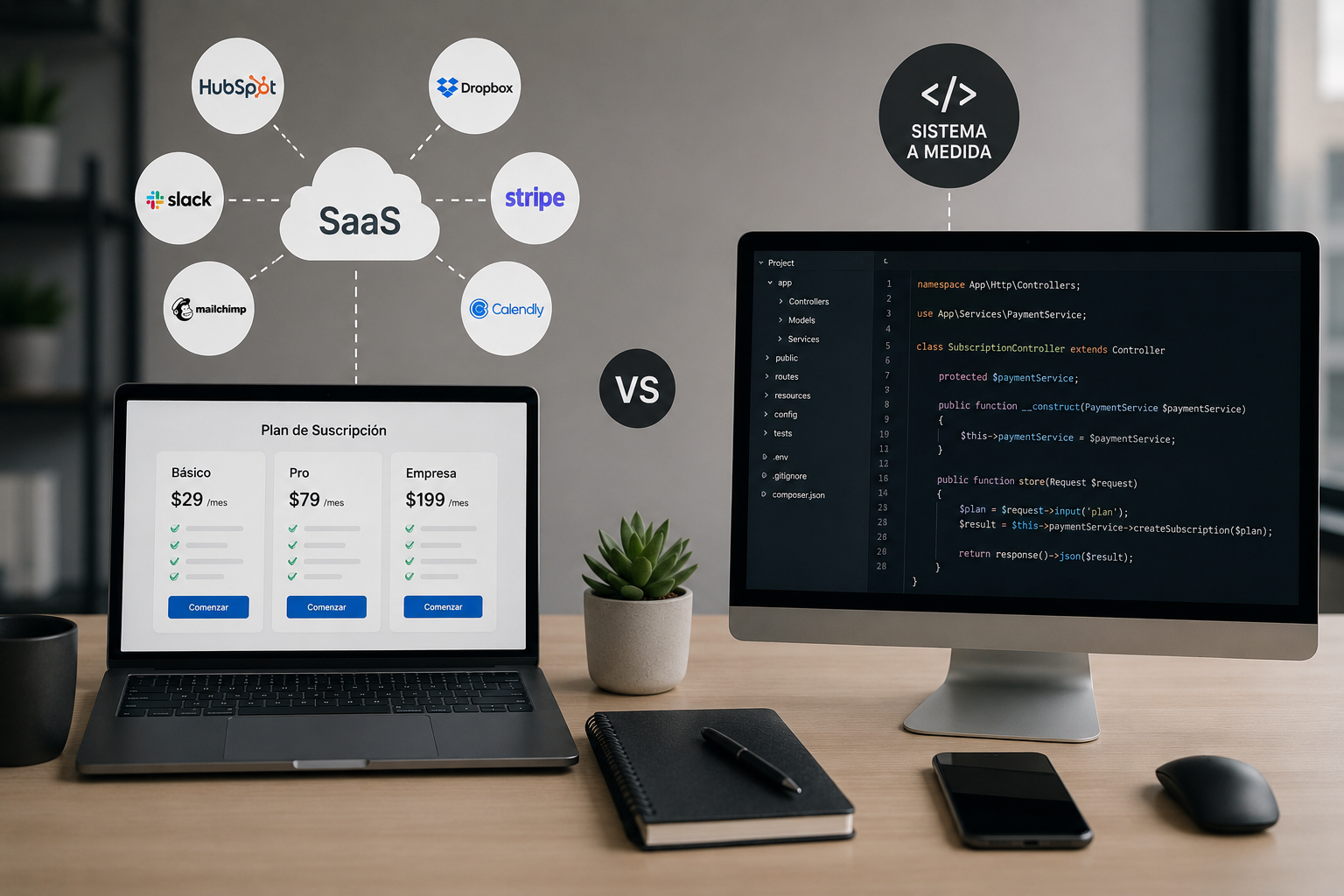
Common model:
Freemium Plan
Limited access or free trial.
Professional Plan
Advanced features.
Enterprise Plan
Custom solutions and dedicated support.
Think about your buyer persona. Not all customers value the same things.
Real Challenges When Building a SaaS
The launch is just the beginning.
Who Builds a SaaS?
It depends on project size, but typically involves:
Technical team
Design
Strategy
Internal Team vs. Agency?
Internal team
Specialized agency
The decision depends on budget, time, and technical expertise.
How Much Does It Cost to Develop a SaaS?
It depends on:
An MVP requires a moderate investment.
An enterprise platform demands structured planning.
The difference between a SaaS that survives and one that scales is the architecture and the team behind it.
Conclusion
Knowing how to build a SaaS in 2026 means having strategy, validation, solid architecture, and business vision.
At Nebula Solutions, we transform ideas into scalable, sustainable platforms.
Share

Written by
Ana Olivia Todesco
CEO @ Nebula Solutions