Managing a travel agency without the right software is like writing reservations on paper - it works, but it slows you down. The problem isn't a lack of options. There are dozens of tools on the market. The real challenge is finding one that fits your operation without overpaying or hitting a ceiling when you grow.
This guide compares the top travel agency management software tools, their pricing and limitations, and explains when custom software is the smarter investment.
Best travel agency software in 2026
1. Rezdy
Best for: tour operators and activity providers. Strong focus on online bookings and OTA distribution (Viator, GetYourGuide, Expedia).
Pricing: from ~$49 USD/month + commission per booking.
| ✅ Pros | ❌ Cons |
|---|---|
| Fast to implement for activity-based tours | Limited for outbound agencies or complex packages |
| Native integrations with major OTAs | Commission model gets expensive at volume |
| Real-time availability calendar | Basic CRM - not suited for lead tracking |
| Good field app for guides and crew | Low brand customization |
Best for: day tour operators, adventure activities, ecotourism, excursions.
2. TrekkSoft
Best for: tour operators with online sales presence. Popular in Europe and Latin America.
Pricing: from ~€149/month.
| ✅ Pros | ❌ Cons |
|---|---|
| Embeddable booking engine for your site | Steeper learning curve |
| Guide management and resource scheduling | Support primarily in English and German |
| Own sales channel + OTA distribution | Not built for complex packages or multi-destination circuits |
| Performance reports by product and guide | Cost climbs fast with add-ons |
Best for: tour operators with their own guides, outdoor activities, inbound tourism.
3. Checkfront
Best for: rental and activity businesses that need flexible availability management.
Pricing: from ~$125 USD/month.
| ✅ Pros | ❌ Cons |
|---|---|
| Flexible: tours, rentals, classes, activities | No native OTA distribution |
| Customizable booking widget | Limited CRM for complex sales tracking |
| Stripe, PayPal, QuickBooks integrations | No advanced automation |
| Clean management panel for small teams | - |
Best for: small-to-mid agencies, equipment rental, capacity-limited activities.
4. FareHarbor
Best for: tours and activities. Dominant in the US market.
Pricing: no fixed monthly fee - commission per booking (~6% + card processing).
| ✅ Pros | ❌ Cons |
|---|---|
| No upfront monthly cost | Commission becomes expensive at scale |
| Good onboarding and support | Hard to customize workflows |
| Solid booking engine | US-centric, limited for local payment gateways |
| Strong Google Things To Do integration | Less control over pricing and margins |
Best for: operators who want to start without fixed costs.
5. Savia
Best for: outbound and wholesale travel agencies. Widely used in Spain and LATAM.
Pricing: license or SaaS model - contact vendor.
| ✅ Pros | ❌ Cons |
|---|---|
| Built for the traditional travel agency model | Legacy interface in many versions |
| Full backoffice: suppliers, margins, commissions, billing | Slower and more expensive to implement |
| Quote and expedient management | Low flexibility for custom workflows |
| Spanish-language support | Limited integration with modern CRM or marketing tools |
Best for: traditional outbound agencies with complex accounting needs.
When none of them is enough
Generic software solves 80% of standard cases. But some operations hit real ceilings:
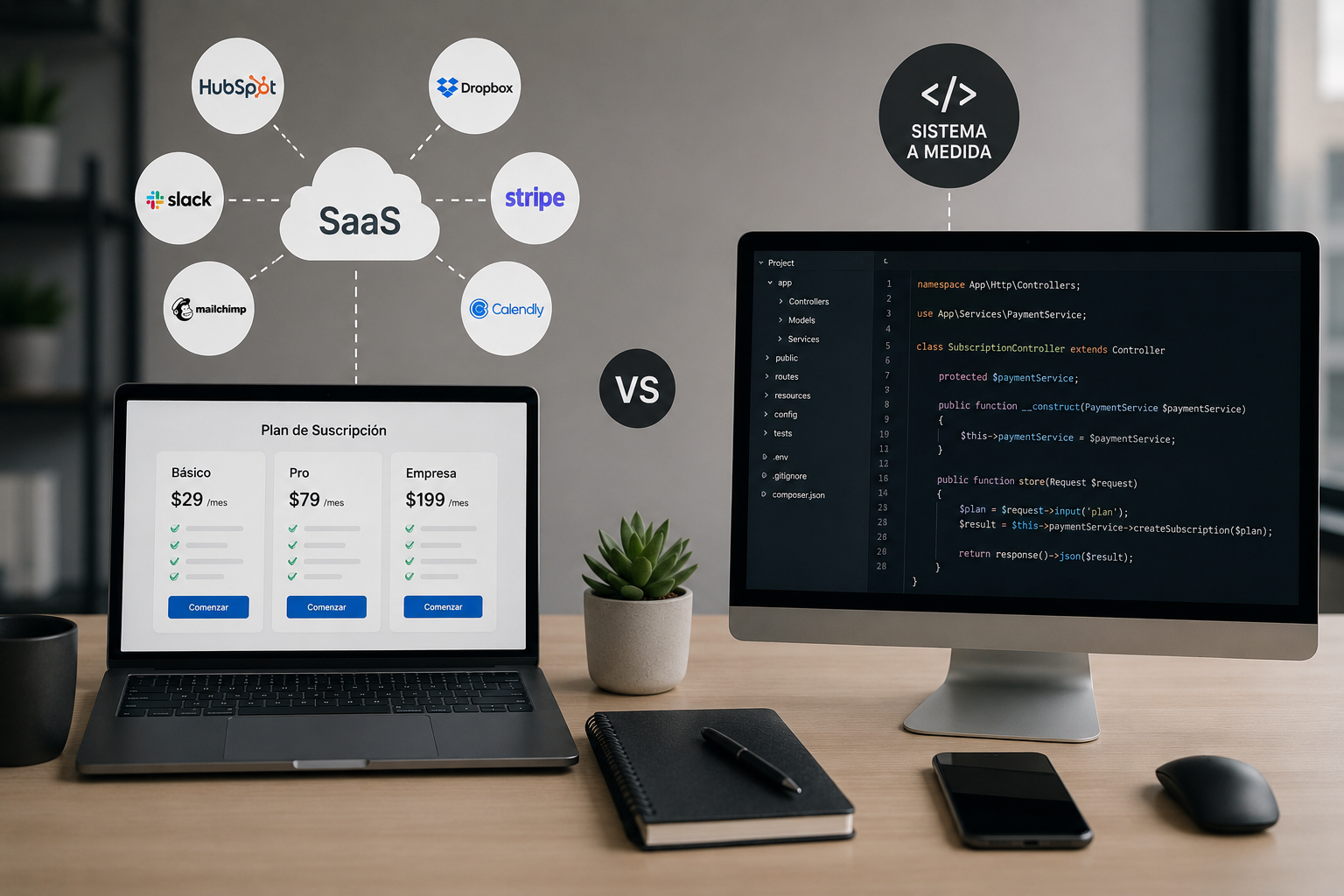
In those cases, a custom system isn't a luxury - it's the most efficient option in the medium term.
What we've built for travel agencies
At Nebula Solutions, we developed Tourly - a travel agency management system with a booking engine, CRM, and communication automation, built from scratch to adapt to how agencies actually operate.
We also worked with Sense Patagonia, an adventure tourism operator in Patagonia, where we integrated an online reservation system with internal guide management and real-time availability - replacing a manual process that was capping their sales capacity.
If your agency has workflows that no generic software covers well, we can build a system that fits your operation exactly.
→ See our tourism software solution
Generic vs custom: how to decide
| Situation | Recommendation |
|---|---|
| New agency, standard tours | Generic software (Rezdy, Checkfront) |
| Low volume, no IT team | Generic software |
| Custom workflows, complex processes | Custom system |
| Integrations with existing systems | Custom system |
| Scaling beyond platform limits | Custom system |
| Per-booking commission unsustainable | Custom system |
The rule: if you spend more time working around your software's limitations than actually running your agency, it's time for a system built around you.
Share

Written by
Ana Olivia Todesco
CEO @ Nebula Solutions
We build this at Nebula